
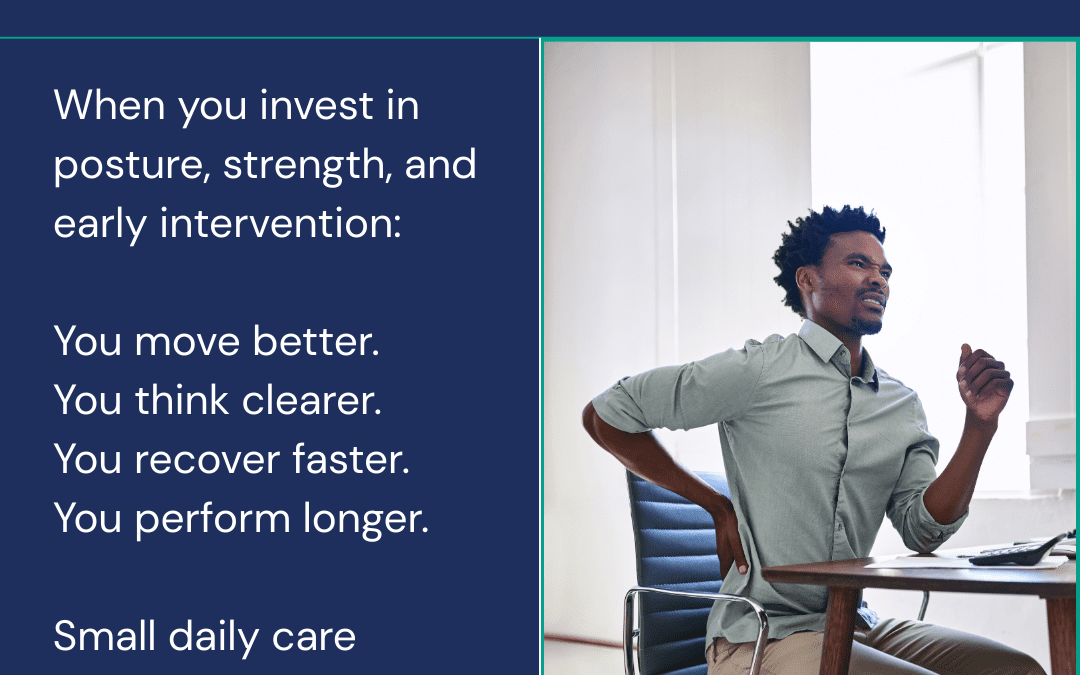
Your body is amazing, but it’s not invincible. How often do we ignore those little aches, tight spots, or niggles in our legs, hips, or back, hoping they’ll just go away? The truth is, your neuromuscular skeletal system (your muscles, joints, and nerves) works best when you pay attention early, not after your legs have started sending urgent “help me!” messages.
Think of it like standing on a wobbly foundation: you wouldn’t build a house on it, so why let your body carry on like everything is fine? Good posture, healthy movement patterns, and proactive care are the foundation of long-term mobility and pain-free living.
Why Good Standing Matters
Standing seems simple, but the way we stand affects everything from our feet to our back. Poor alignment can cause stress in unexpected places, leading to aches in knees, hips, or shoulders. The key isn’t to obsess over perfect posture but to notice how your body feels and address issues early.
For example:
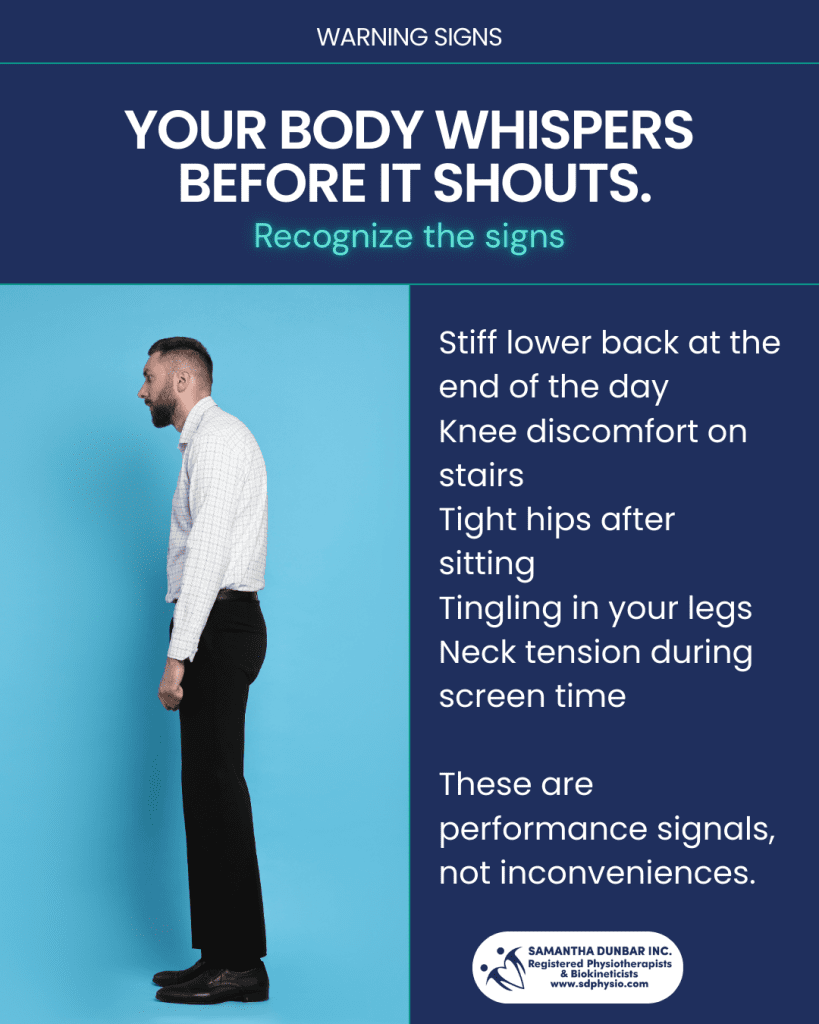
- Tingling in your feet or legs? It could be your nerves or muscles asking for attention.
- Knee or hip discomfort after a long day? That’s your joints hinting that your movement patterns might need fine-tuning.
- Lower back stiffness? Often a result of your standing, walking, or even sitting habits.
Instead of waiting for pain to escalate or for an injury to “force” you to act, treat these early warnings as opportunities to improve your body’s foundation.
Small Adjustments, Big Impact
The great news is that small, consistent changes can make a huge difference. Here are some practical ways to get your neuromuscular skeletal system firing on all cylinders:
- Check Your Base – Your feet are the foundation. Ensure they’re supported, whether with footwear, orthotics, or simple exercises to strengthen arches and calves.
- Engage Your Core – A strong core isn’t just for abs; it stabilises your spine and pelvis, taking strain off your knees and hips.
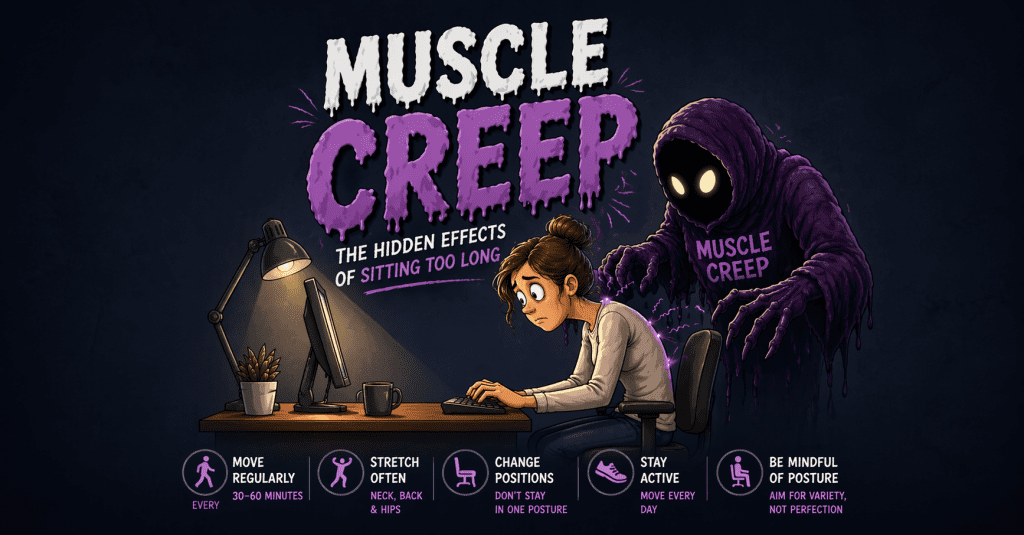
- Move Often – Standing for long periods without change can cause tightness. Gentle stretches, short walks, or leg swings can reset muscles and joints.
- Listen to Your Body – Bring pains forward, don’t ignore them. If something feels off, it’s better to address it early than wait for it to flare into injury.
- Work with a Professional – Physiotherapists & Biokineticists can assess movement patterns, strengthen weak areas, and teach strategies to keep your body resilient.
Don’t Wait for the “Wake-Up Call”

Far too many people wait until pain is unbearable before seeking help. By then, habits are entrenched, joints may be stiff, and recovery takes longer. Instead, think proactively:
- A twinge in your knee after climbing stairs? Get it checked.
- Foot discomfort after a long walk? Correct it early.
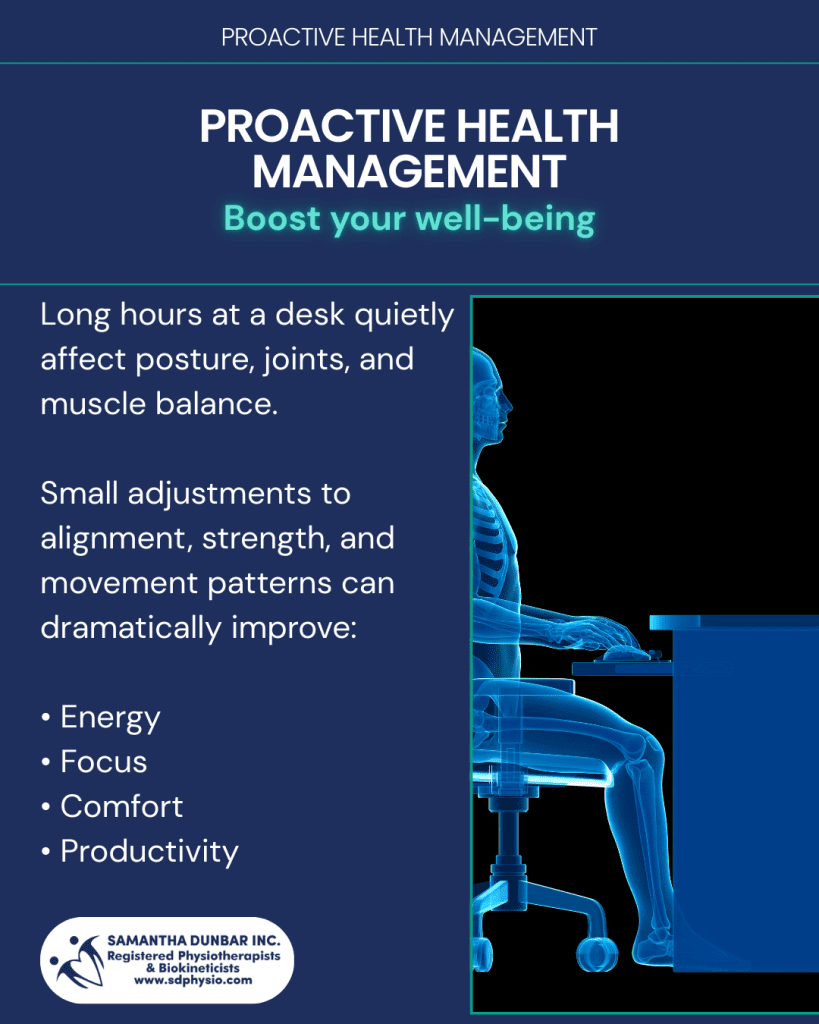
- Constant lower back ache from standing at your desk? Adjust your posture and movement strategy now.
Addressing issues early doesn’t just prevent pain—it keeps you moving freely, strengthens your confidence, and improves your overall quality of life.
Start Today
Your body is meant to move, support, and carry you through life—not remind you of neglect. Start on a good foot by paying attention to alignment, movement patterns, and early signs of discomfort. Small actions today can save you from bigger problems tomorrow.
Whether it’s a quick assessment, some corrective exercises, or a chat with a physiotherapist, taking the first step toward a healthier neuromuscular skeletal system is always worth it.
Because when your foundation is solid, your body can handle life’s ups, downs, and everything in between—with less pain and more freedom to move.