

There’s a moment most people recognise.
You get up… and something feels different. A little tighter. A little slower. Not quite as easy as it usually is.
And often, it happens just as the seasons start to shift.
This is what many experience as seasonal stiffness, and it’s more common than you think.
Why your body feels different when the weather changes
It’s not in your head. There are real physiological reasons behind it.
1. Your muscles respond to temperature
As the weather gets colder, your muscles naturally contract more and lose a bit of their elasticity.
This makes movement feel restricted, especially first thing in the morning or after sitting for a while.
At the same time, your body prioritises keeping your core warm, which means slightly reduced blood flow to your extremities.
The result? Muscles and joints that feel tight, less responsive, and slower to warm up.

2. Your joints aren’t moving as smoothly
Inside your joints is a lubricating substance called synovial fluid.
In colder temperatures, this fluid can thicken slightly, making movement feel less fluid and more “stiff”.
If you’ve had previous injuries or live with conditions like osteoarthritis, you’ll often feel this change more noticeably.

3. Your routine changes (even if you don’t realise it)
Seasonal shifts don’t just affect your body — they affect your behaviour.
- You move less
- You sit more
- You spend less time outdoors
- Your posture starts to slip
All of this adds up.
Even small changes in daily movement can lead to tightness, reduced mobility, and muscle imbalance over time.

4. Hydration quietly drops
One of the most overlooked factors?
You simply drink less water in cooler weather.
Dehydration affects muscle function, recovery, and joint health more than most people realise, and it often goes unnoticed.

So what can you do about it?
The good news is this isn’t something you need to “push through”, it’s something you can work with.
Keep moving (even when you don’t feel like it)
You don’t need intense workouts.
You need consistent, gentle movement:
- Walking
- Light stretching
- Mobility work
Small, regular movement is far more effective than doing nothing and then trying to “catch up”.
Warm up properly
Cold muscles need more preparation.
Take a few extra minutes to warm up before activity. It improves blood flow, reduces injury risk, and makes movement feel easier.
Prioritise flexibility and strength
Flexibility keeps your joints moving well. Strength supports them.
A combination of:
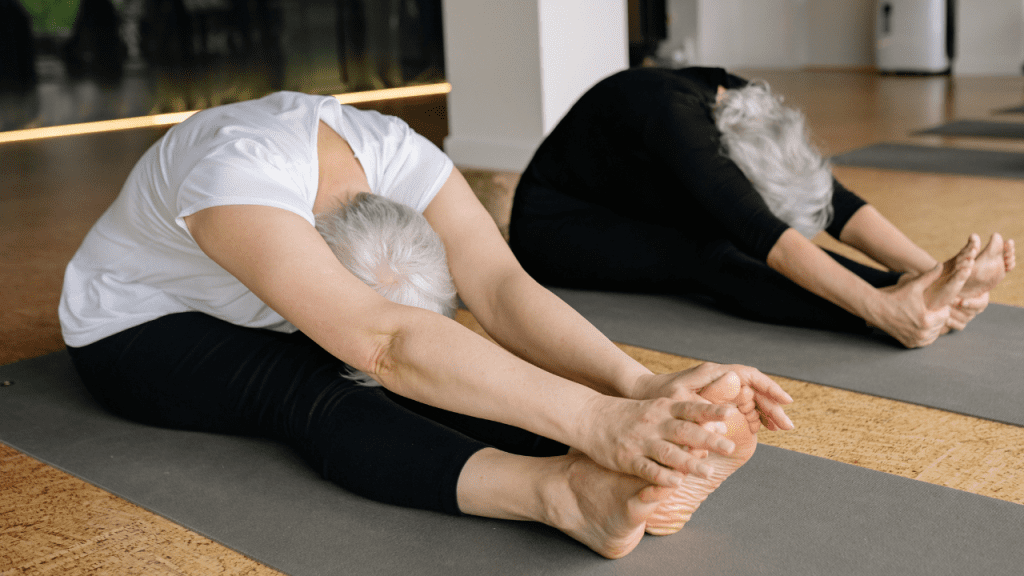
- Dynamic stretching
- Yoga or mobility work
- Strength training
…helps maintain balance and reduces stiffness over time.
Keep your body warm
This sounds simple, because it is.
Layer up. Use heat where needed (warm showers, heating pads).
Warm muscles move better. Always.

Don’t forget hydration and nutrition
Drink water, even when you’re not thirsty.
Support your body with:
- Anti-inflammatory foods
- Balanced nutrition
- Omega-3 fatty acids
These small inputs have a big impact on how your body feels and recovers.

A different way to look at it
Seasonal stiffness isn’t a problem.
It’s feedback.
Your body is responding to changes in temperature, movement, and routine and asking you to adjust to it.
Final thought
You don’t need to do more. You just need to do things a little more consistently.
Because when the seasons change… your body doesn’t need perfection.
It just needs movement, warmth, and attention.