
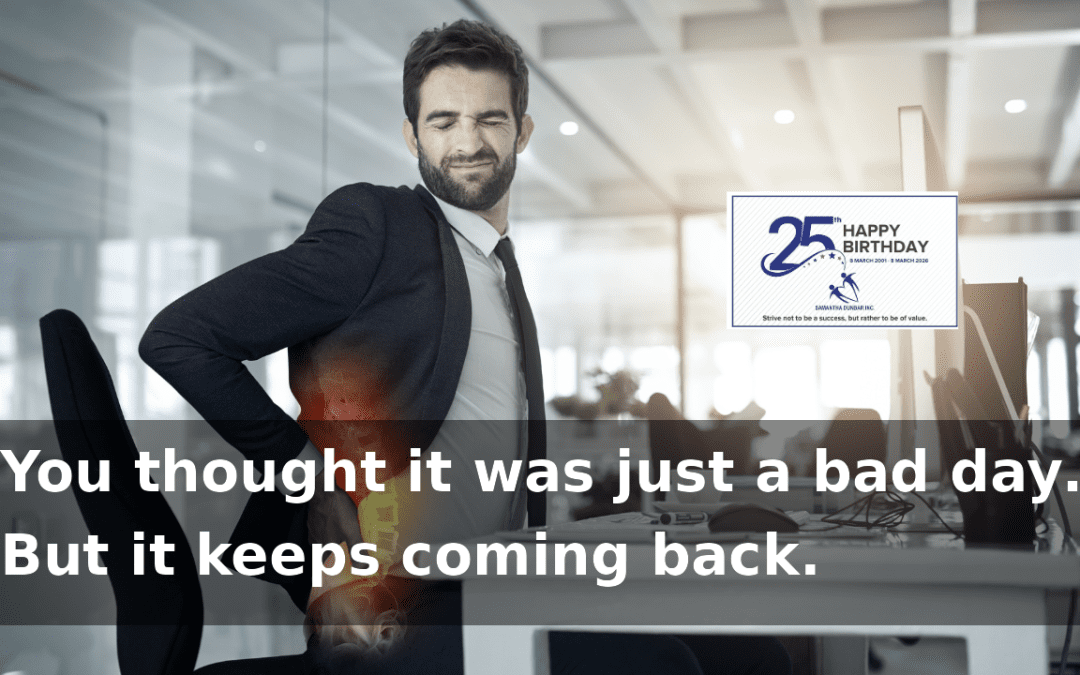
Lower back pain is one of the most common complaints among office workers. Many people assume it is caused by a sudden injury, but in most desk-based jobs the problem develops slowly over time. Hours of sitting, poor posture, and not moving enough place repeated stress on the structures of the lower back.
The good news? Understanding why it happens is the first step to preventing it.
The Real Problem: Prolonged Sitting
Your spine has natural curves that help it absorb force and keep you balanced. When you sit for long periods, especially with poor posture, these curves begin to change.
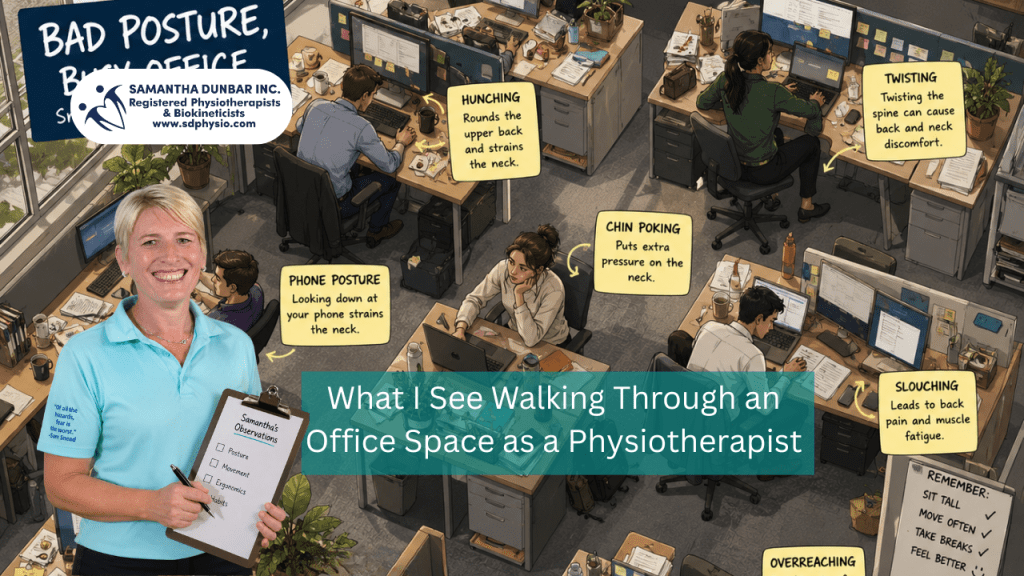
A typical “desk posture” often includes:
- Rounded shoulders
- A forward head position
- Slumping through the lower back
- Leaning towards the screen
When this happens, the natural curve in the lower back flattens. This increases pressure on the spinal discs and forces the muscles around the spine to work harder to support you.
Over time, this can lead to stiffness, fatigue, and eventually pain.
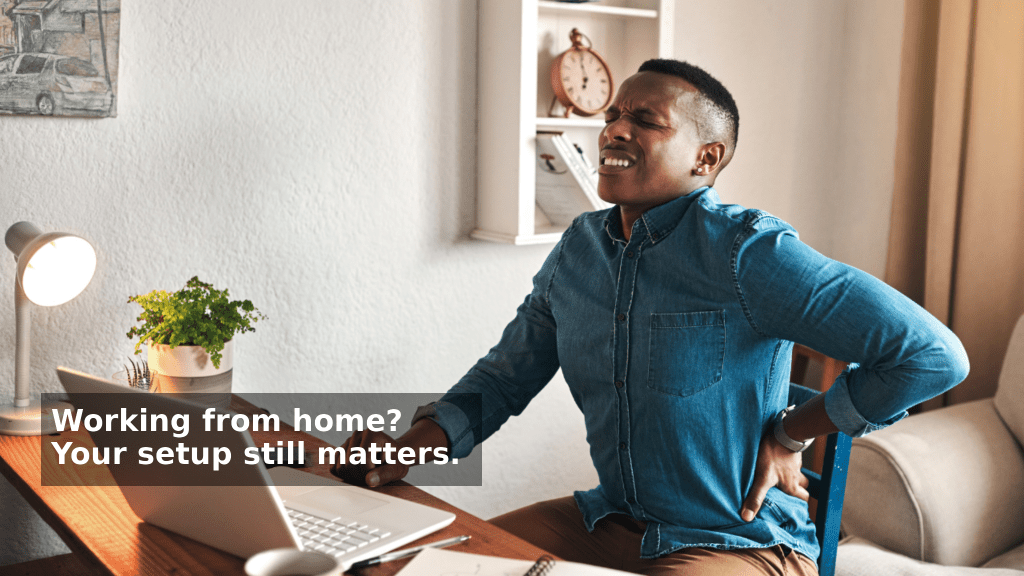
What Happens Inside the Body?
1. Muscle Imbalances Develop
When you sit all day, certain muscles become tight while others become weak.
Typically:
- Hip flexors become shortened
- Lower back muscles become overworked
- Core and glute muscles weaken
Your core and glute muscles play an important role in supporting the spine and pelvis. When they are weak, the lower back takes more strain than it should.
This imbalance changes the way you move and stand, increasing the risk of ongoing back pain.
2. Increased Pressure on the Discs
Between each vertebra in your spine are soft discs that act like cushions or shock absorbers.
Research shows that sitting places more pressure on these discs than standing. Slouched sitting increases that pressure even further. Over time, this repeated compression may contribute to:
- Disc irritation
- Reduced disc hydration
- Degenerative changes
This does not mean that everyone with a desk job will develop disc problems, but prolonged poor posture can make the lower back more vulnerable.
3. Reduced Movement Means Less Circulation
Unlike muscles, spinal discs have a very limited blood supply. They rely on movement to help deliver nutrients and remove waste products.
When you stay in one position for hours:
- Blood flow slows
- Joints stiffen
- Muscles fatigue
- Tissues become more sensitive
This is why many people feel stiff and sore when they first stand up after sitting for a long time.
4. Nerve Irritation Can Occur
Sitting for prolonged periods can also increase pressure around the nerves in the lower back. In some people, particularly those with existing disc issues or poor posture, this may irritate the sciatic nerve.
This can cause:
- Pain travelling into the buttock or leg
- Tingling or numbness
- A “pins and needles” feeling
This is commonly called sciatica.
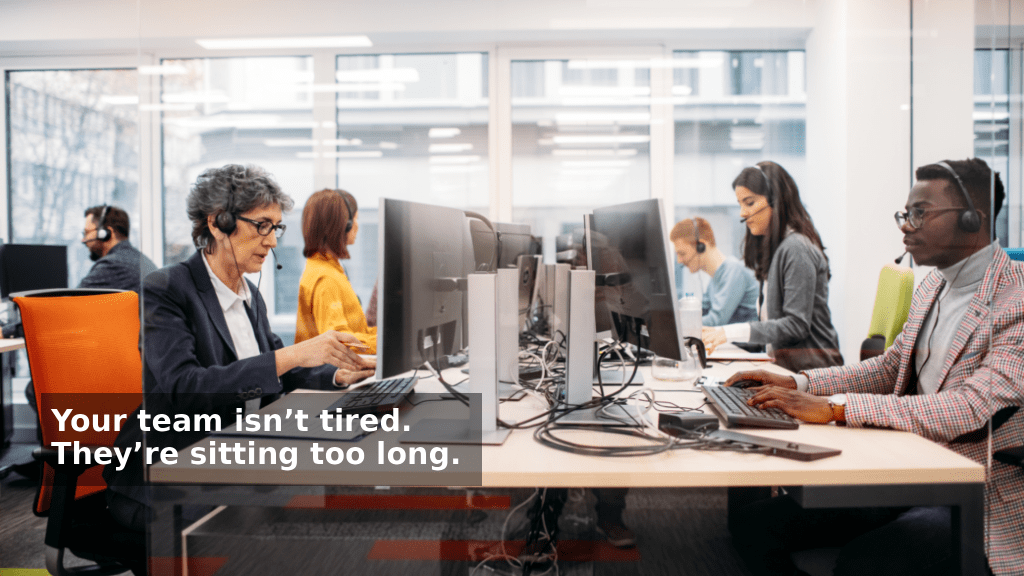
Why Good Ergonomics Matters
Your workstation should fit your body — not the other way around.
A good ergonomic setup reduces strain on the spine and allows your muscles to work more efficiently.
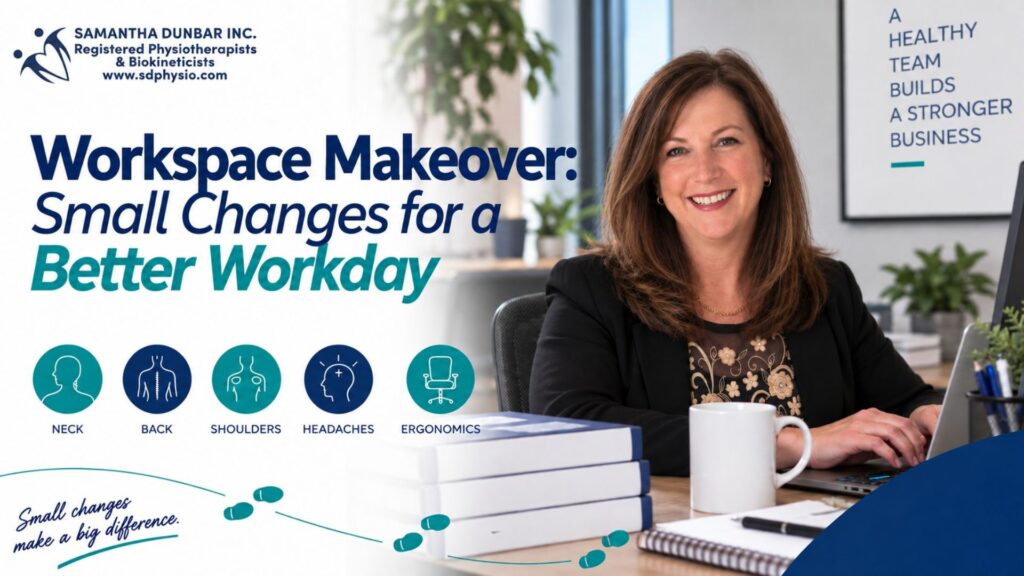
Check These Key Areas:
- Your feet should be flat on the floor
- Your knees should be level with or slightly lower than your hips
- Your chair should support the natural curve of your lower back
- Your elbows should be bent to roughly 90 degrees
- The top of your screen should be at eye level
Small changes in desk setup can make a surprisingly big difference.
How to Protect Your Lower Back
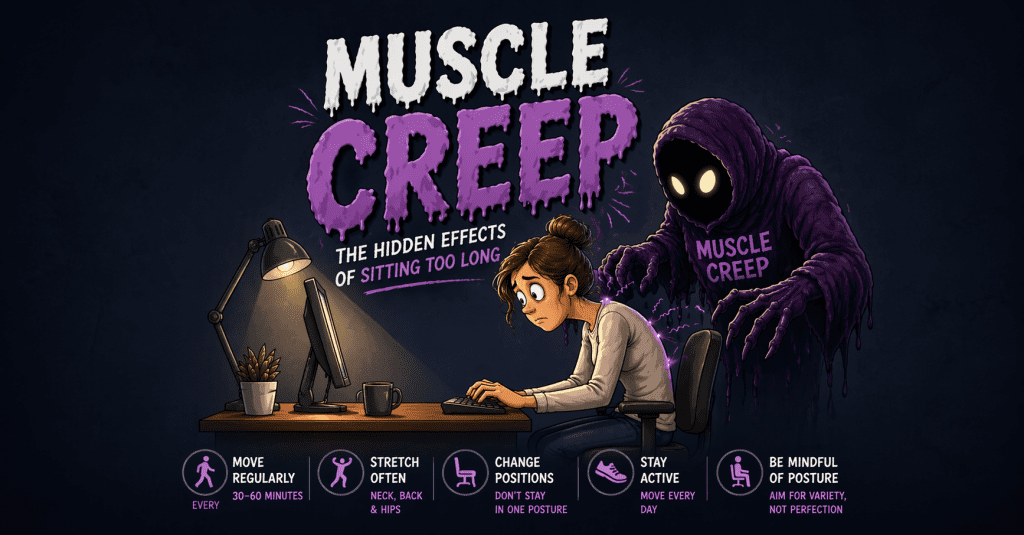
1. Move Regularly
Try to stand, stretch, or walk every 30–60 minutes. Even a short movement break helps reduce stiffness and improve circulation.
2. Strengthen Your Core
Exercises for your core, glutes, and postural muscles help support the spine and reduce the load on your lower back.
3. Stretch Tight Areas
Focus on the hip flexors, hamstrings, chest, and lower back if you spend long hours sitting.
4. Consider a sit-stand desk.
Alternating between sitting and standing can reduce the amount of time spent in one position.

The Bottom Line
Desk jobs do not automatically cause lower back pain, but the habits that often come with them can.
Poor posture, prolonged sitting, weak support muscles, and limited movement all place stress on the lower back. Fortunately, small changes to your posture, workstation, and daily routine can make a big difference.
Your spine is designed to move. The more often you allow it to do so, the better it will feel.
If your workspace isn’t supporting your body, it may be time for a change. Whether you’re working from home or managing a full office, we can help you set up your environment properly. Get in touch today to book an ergonomic assessment.