
Walking through an office space as a physiotherapist is a bit like seeing the workplace through a different lens. While most people notice the hum of printers, the clatter of keyboards, or colleagues rushing between meetings, I notice movement patterns, posture habits, and the subtle ways people interact with their environment. Every step through an office tells a story about physical health, musculoskeletal strain, and the small habits that can either support or sabotage long-term well-being.
The first thing I often observe is how people walk through the office. Many employees move with purpose, often quickly, particularly when heading to meetings or trying to meet deadlines. However, speed often comes at the expense of good movement mechanics. I frequently notice rounded shoulders, forward head posture, and a generally collapsed upper body position while people walk. This is usually the result of prolonged desk work and constant screen use, where the body adapts to spending hours hunched over laptops and phones.
Some individuals shuffle rather than stride, taking short, cautious steps, often a sign of stiffness in the hips or lower back. Others walk while looking down at their phones, placing unnecessary strain on the neck and upper thoracic spine. This “tech neck” posture has become incredibly common in office environments and often contributes to headaches, neck pain, and upper back discomfort.
Then there is the elevator dynamic, one of the most revealing parts of office movement culture. It is striking how often people choose the lift for just one or two floors. While this may seem insignificant, it reflects a broader trend of reduced incidental movement in modern workplaces. Small opportunities for physical activity, like taking the stairs, are frequently missed.
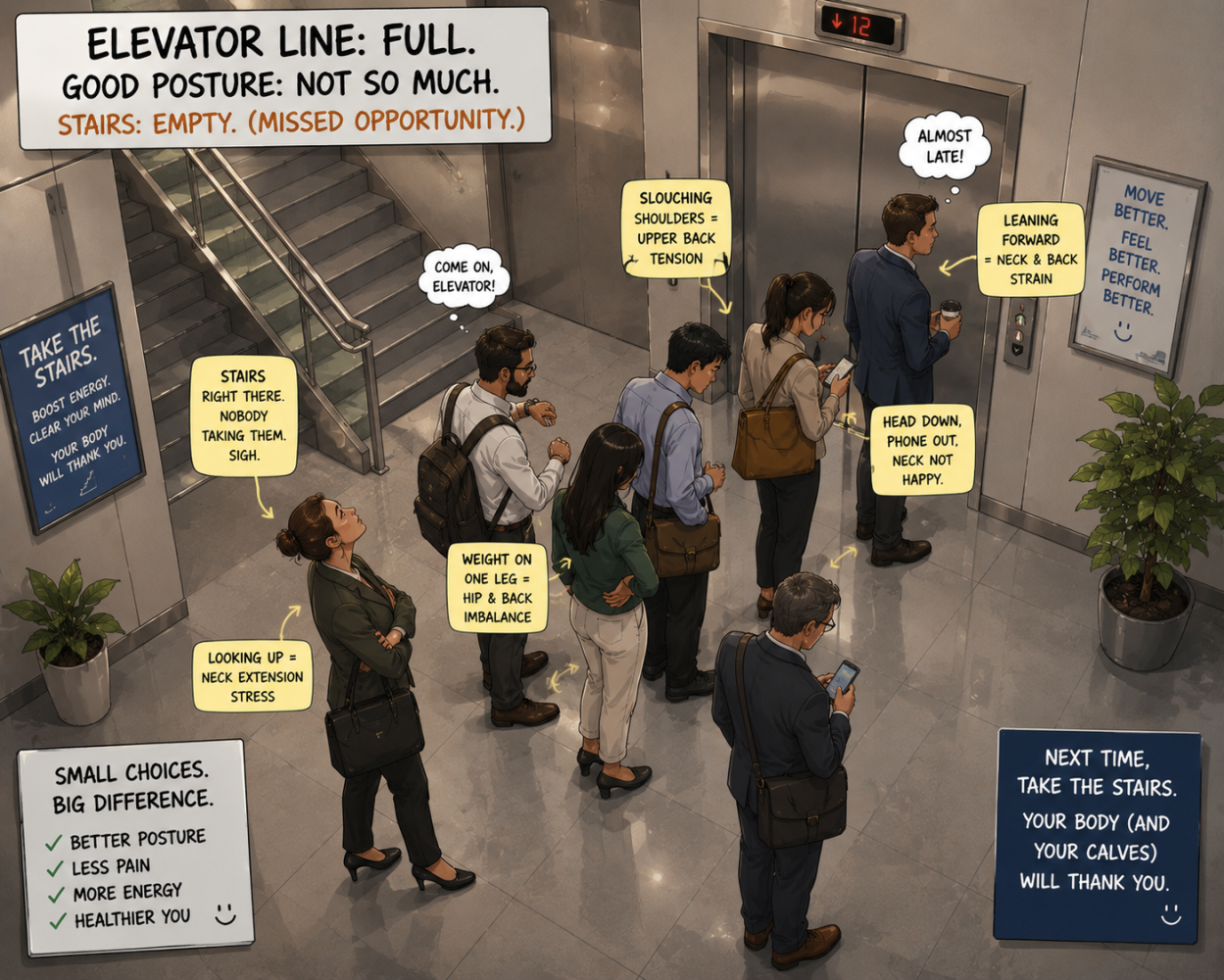
When people stand waiting for the elevator, I often notice postural habits that suggest muscular imbalance. Many lean heavily onto one leg, causing uneven loading through the pelvis and lower back. Others slump against walls or hunch over their phones, reinforcing poor spinal alignment. These positions may feel comfortable in the moment, but over time they contribute to asymmetry, joint stiffness, and muscle tension.
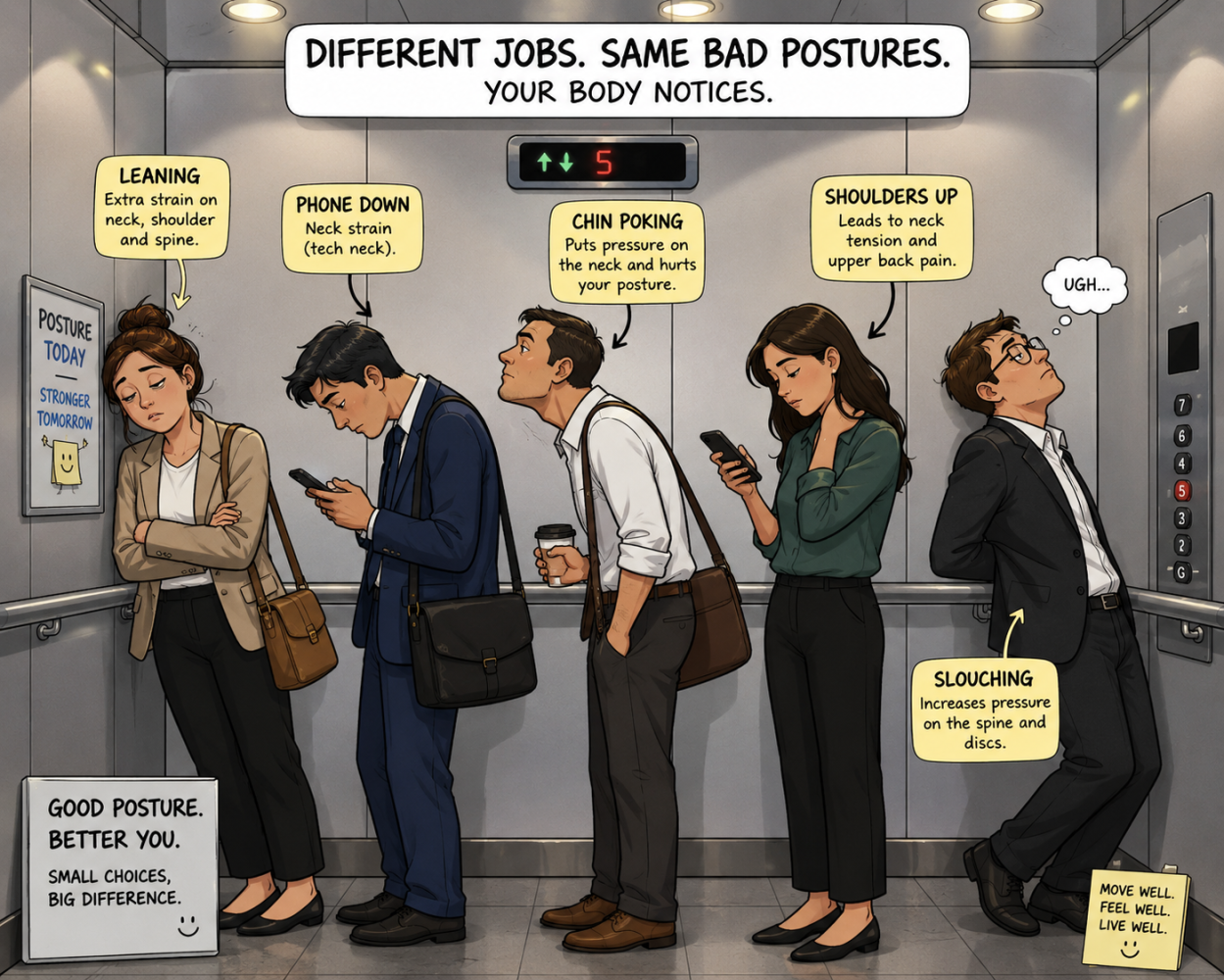
Inside the elevator itself, most people stand passively, often with their heads dropped forward while scrolling through emails or messages. It is another example of how even brief moments in the day become opportunities for sustained poor posture.
At the desks, is where the real problem lies.
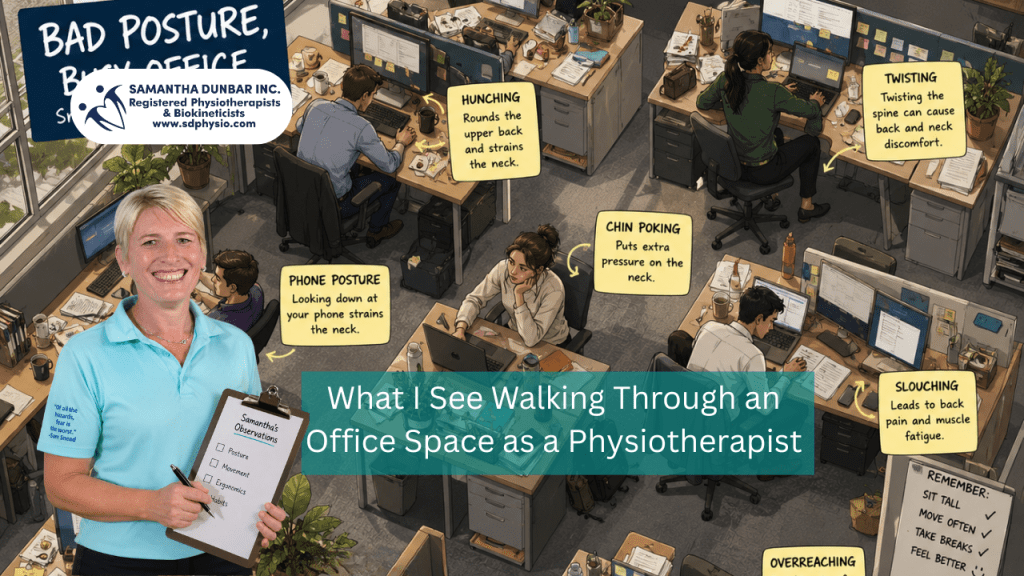
Desk work has become one of the biggest contributors to musculoskeletal discomfort, and it shows. I often see employees sitting perched on the edge of their chairs without back support, while others sink deep into their seats with a rounded lower back and protruding chin. Both positions place excessive strain on the spine.
Monitor positioning is another common issue. Screens are often too low, forcing workers to constantly look down, or too far away, encouraging a forward head posture. Keyboards and mice are frequently placed in positions that require overreaching, placing strain on the shoulders and wrists.
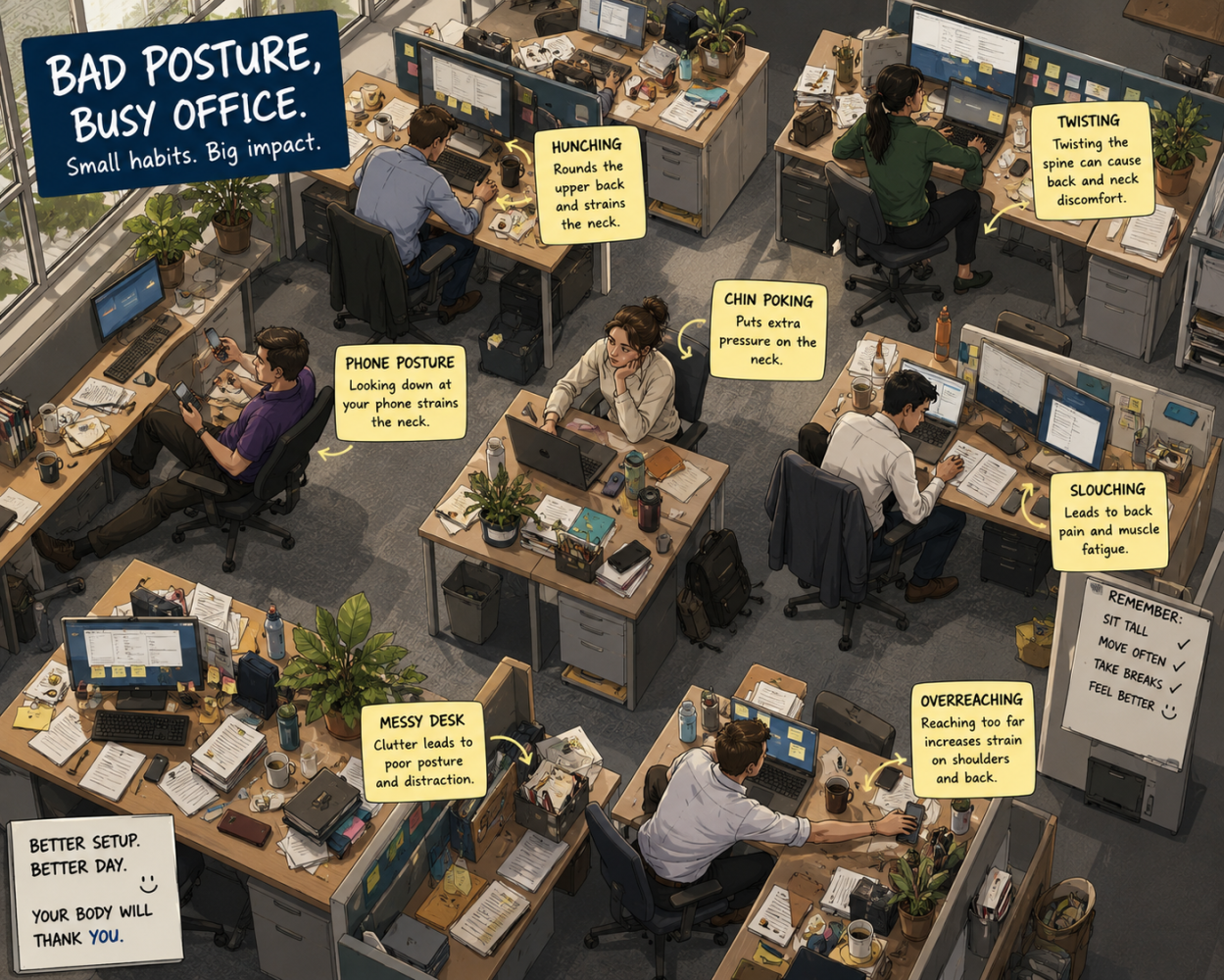
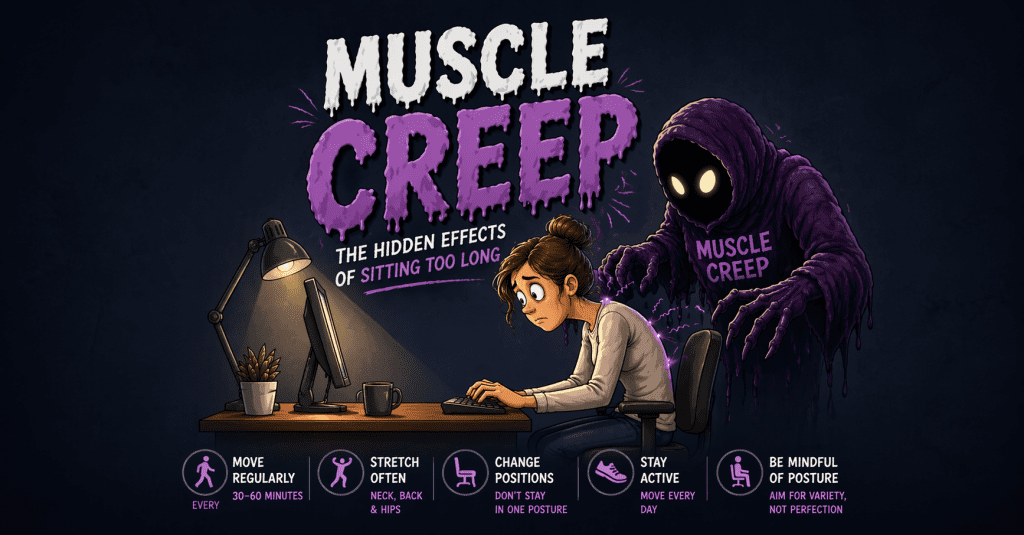
One of the most concerning observations is how long people remain static. It is not unusual to see someone seated in the same position for hours, completely absorbed in their work. The body is designed for movement, and prolonged stillness reduces circulation, increases muscle stiffness, and contributes to fatigue. Even the “perfect posture” becomes problematic if maintained for too long.
I also notice how people interact with stress physically. Tight shoulders, clenched jaws, shallow breathing, and constant fidgeting often reveal tension long before someone complains of pain. Stress does not just affect the mind, it manifests throughout the body.
Yet, what stands out most is that many of these issues are preventable.
Small changes can have a profound impact: choosing the stairs, standing up every 30 to 45 minutes, adjusting monitor height, sitting with proper support, and being mindful of posture while walking or waiting. Encouraging movement throughout the workday is not about disrupting productivity; it is about enhancing it. Better movement leads to improved circulation, reduced discomfort, sharper concentration, and greater overall well-being.
As a physiotherapist, walking through an office space reminds me that health is shaped by the seemingly ordinary moments of the day. The way we walk to meetings, wait for elevators, sit at desks, and carry ourselves throughout the workday all matter. Often, preventing pain is not about major interventions but about paying attention to the small habits we repeat every day.