
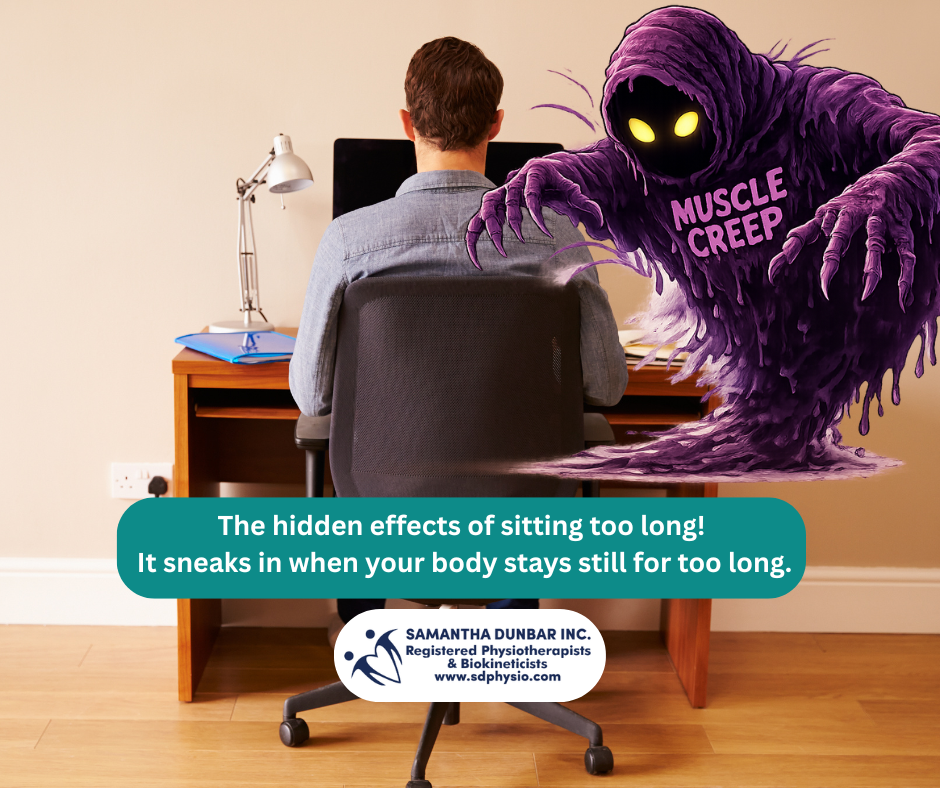
We often think sitting is harmless – after all, it doesn’t feel like hard work. But spending long periods in one position can quietly affect your body in ways you might not expect. One of these effects is something called “muscle creep”.

What Is Muscle Creep?
Muscle creep happens when muscles, tendons, and ligaments are held in a stretched or shortened position for too long. Over time, these tissues begin to adapt to that position, becoming less supportive, more strained, and often uncomfortable.
Instead of staying strong and responsive, they become:
- Stiff
- Weaker
- Less efficient
A Simple Way to Understand It
Try this:
Hold your finger gently pulled back (into a stretched position) for about 30–60 seconds.
When you let go, you’ll likely notice:
- It feels stiff
- It may feel slightly sore or uncomfortable
- It takes a moment to return to normal
That’s a small, simple example of muscle creep.
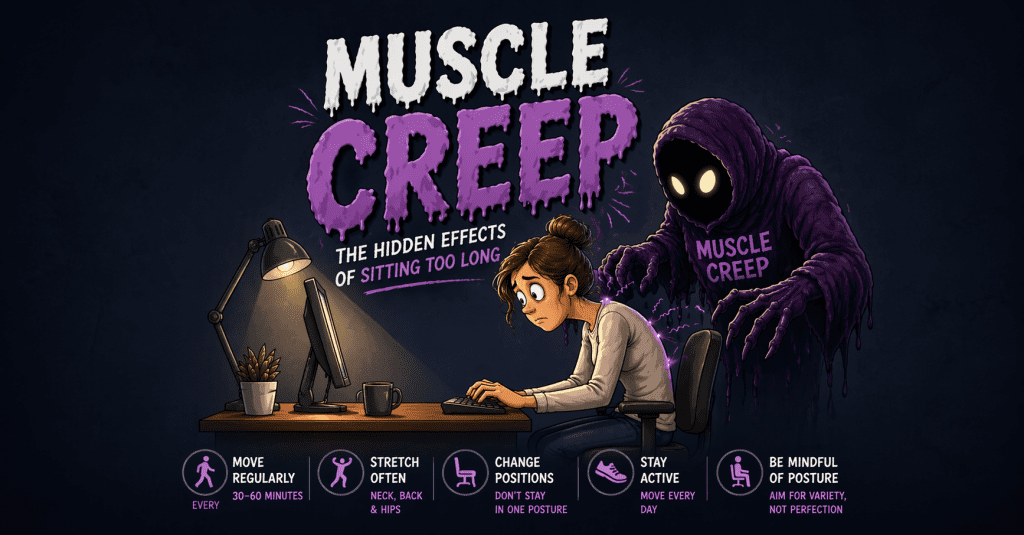
Now imagine the same thing happening to your neck, back, and hips – but instead of seconds, it’s for hours while sitting at a desk, driving, or watching TV.This is a visual illustration of ‘muscle creep’ for educational purposes.This is a visual illustration of ‘muscle creep’ for educational purposes.Play
What Happens When You Sit Too Long?
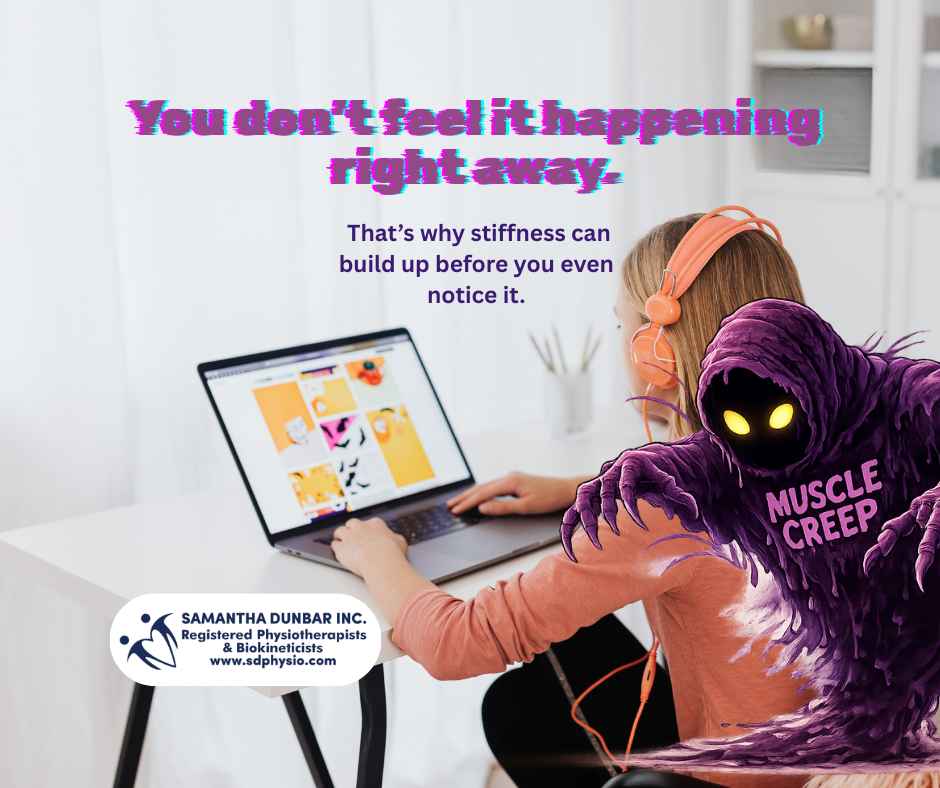
When you sit for long periods:
- Your hip flexors shorten
- Your lower back and neck stay in one position
- Your postural muscles fatigue
- Your body slowly adapts to this position
Over time, this can lead to:
- Back and neck stiffness
- Hip and leg discomfort
- Poor posture
- Reduced flexibility
- Increased risk of pain or injury
From a Physiotherapy Perspective
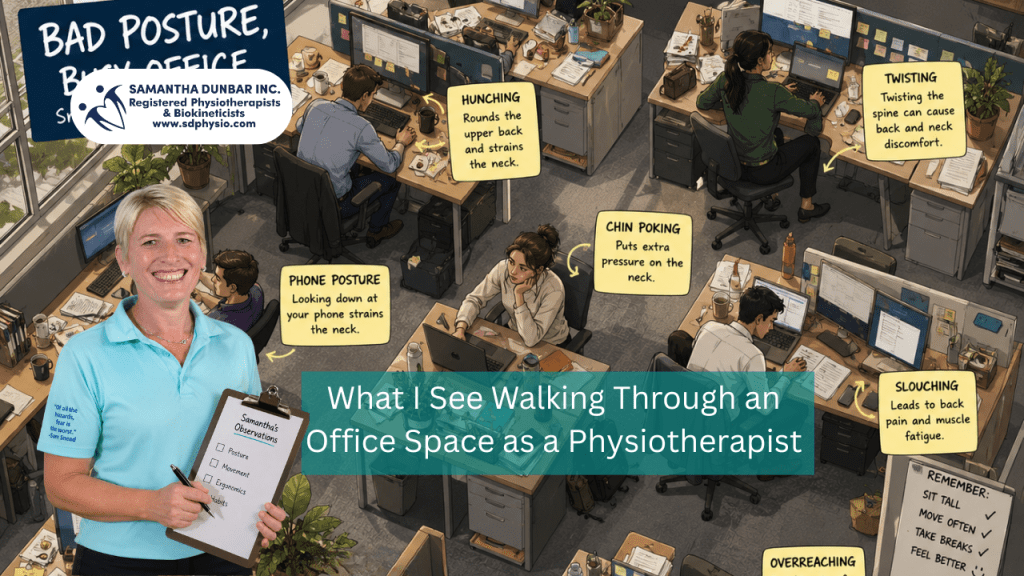
As physiotherapists, we often see patients with pain that isn’t caused by a single injury – but rather by prolonged positioning and lack of movement.
The body is designed to move, not stay still. When it doesn’t move, tissues become less adaptable and more sensitive.
The good news? This is completely manageable and preventable.
What Can You Do About It?
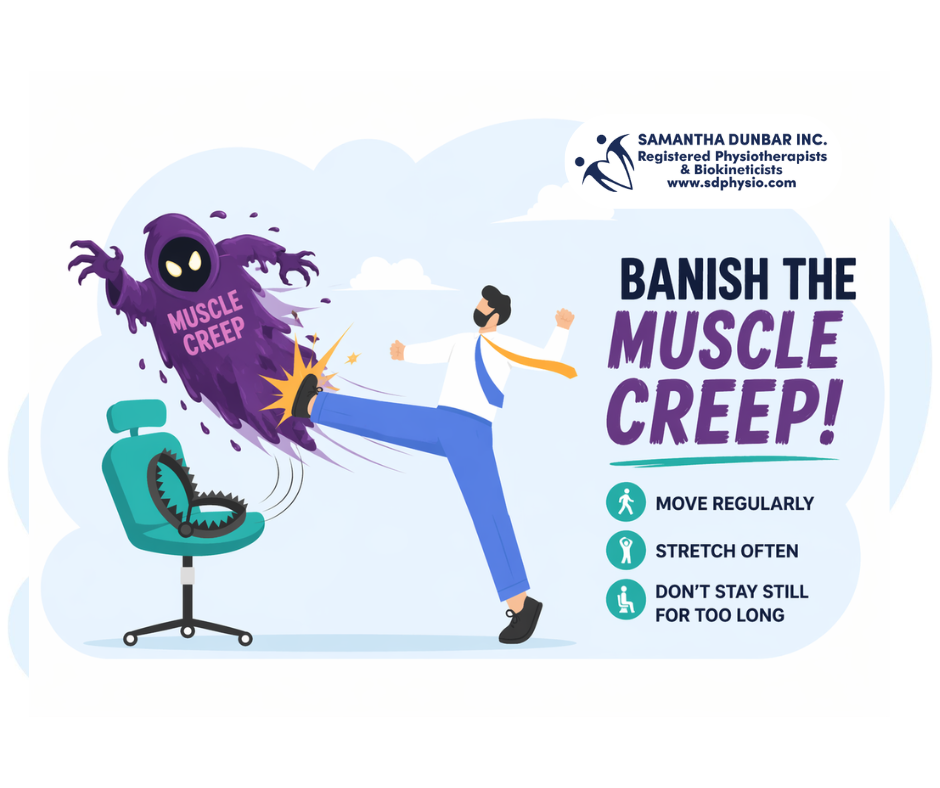
You don’t need to stop sitting – you just need to break it up.
Simple changes can make a big difference:
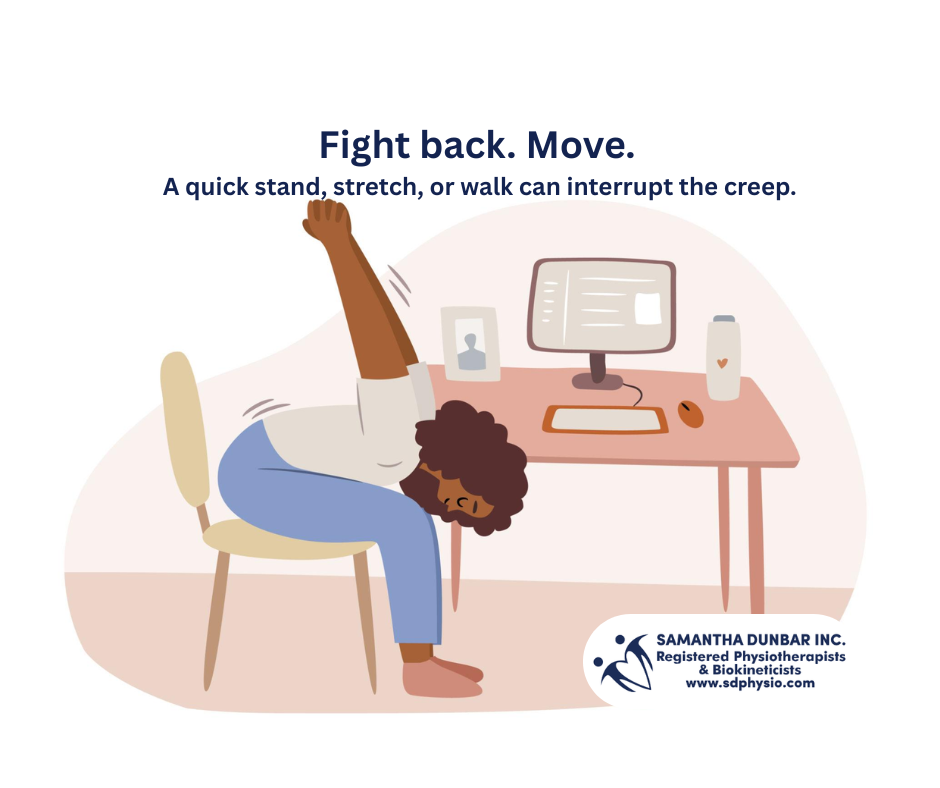
- Move regularly – aim to stand or walk every 30–60 minutes
- Change positions often – don’t stay in one posture too long
- Stretch gently – especially your neck, back, and hips
- Stay active – regular exercise helps counteract long sitting periods
- Be mindful of posture – but don’t aim for “perfect,” aim for variety
The Takeaway
Muscle creep is your body’s way of adapting to stillness – but not in a helpful way. Just like holding your finger in a stretched position for too long, your body needs movement to reset, recover, and function properly.
Small, consistent movement throughout the day can:
- Reduce stiffness
- Improve comfort
- Support better posture
- Prevent long-term pain
Your body doesn’t need perfection – it just needs movement, regularly.