


When you think “physio”, most people picture knees, backs, or stroke rehab.
But there’s a whole branch called chest physiotherapy – and it’s a game-changer for respiratory tract infections.
Pair it with watching your sputum colour, and you’ve got two simple tools that can catch problems early and speed up recovery.
What Chest Physiotherapy Actually Does
Chest physiotherapy is a set of techniques a physio teaches you to help clear mucous from your lungs and airways.
For respiratory infections like bronchitis, pneumonia, COPD flare-ups, or even bad colds, mucous is the problem:
1. Clears stuck mucus: Techniques like percussion, vibration, postural drainage, and breathing exercises loosen secretions so you can cough them out instead of them sitting in your lungs.
2. Improves airflow: Less mucous = wider airways = easier breathing.
3. Reduces infection load: Mucous traps bacteria/viruses. Getting it out means fewer germs hanging around to cause a secondary infection.
4. Prevents complications: In kids, elderly, or anyone bed-bound, poor mucus clearance. Chest physio keeps lung sections open.
Think of it like unclogging a drain.
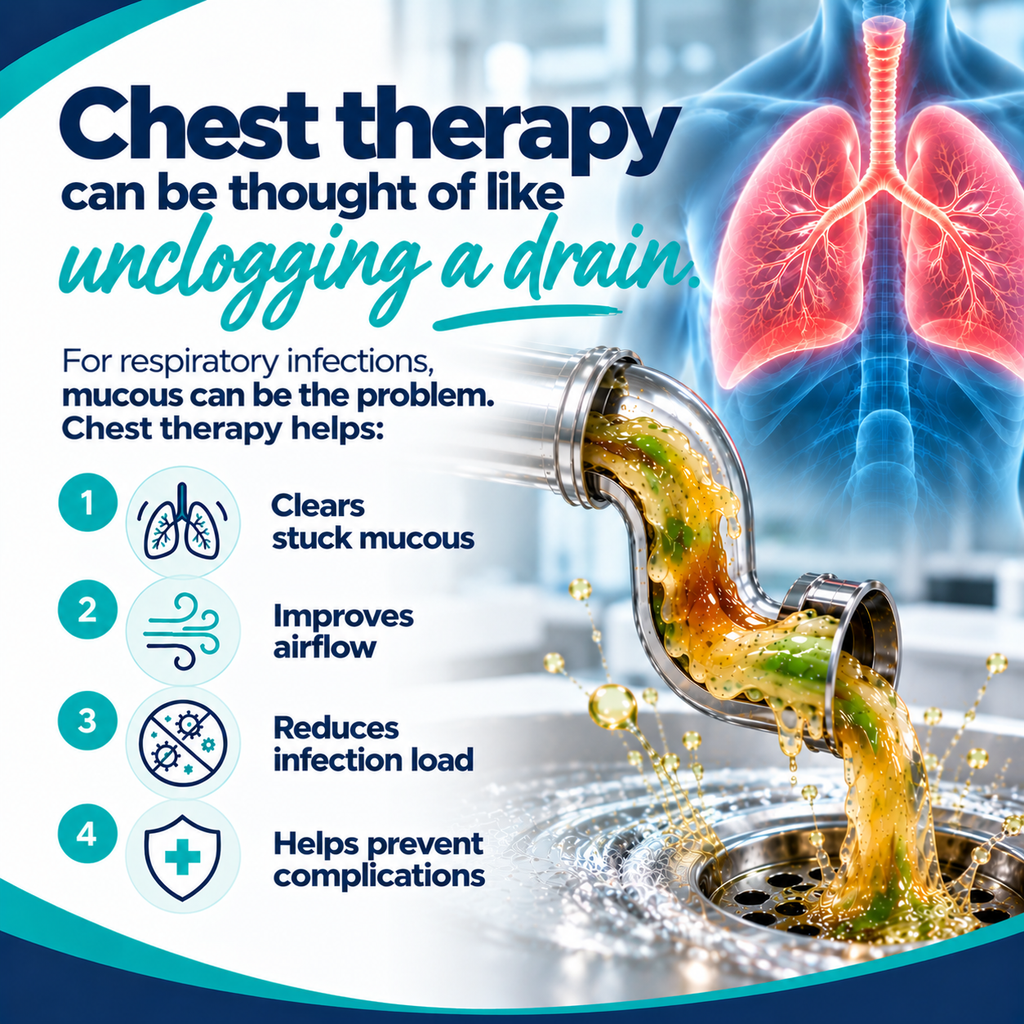
If the mucous stays, bacteria multiply. If you clear it, your lungs + antibiotics/immune system can actually do their job.
Who benefits most: Kids with bronchiolitis, adults with pneumonia/bronchitis, COPD/asthma patients during flare-ups, post-surgery patients, and anyone who’s weak and can’t cough effectively.
Sputum Colour: Your Body’s Free Lab Test
Your cough gives you some information.
Sputum, the mucus you cough up from deep in your chest, changes colour based on what’s happening in your lungs.

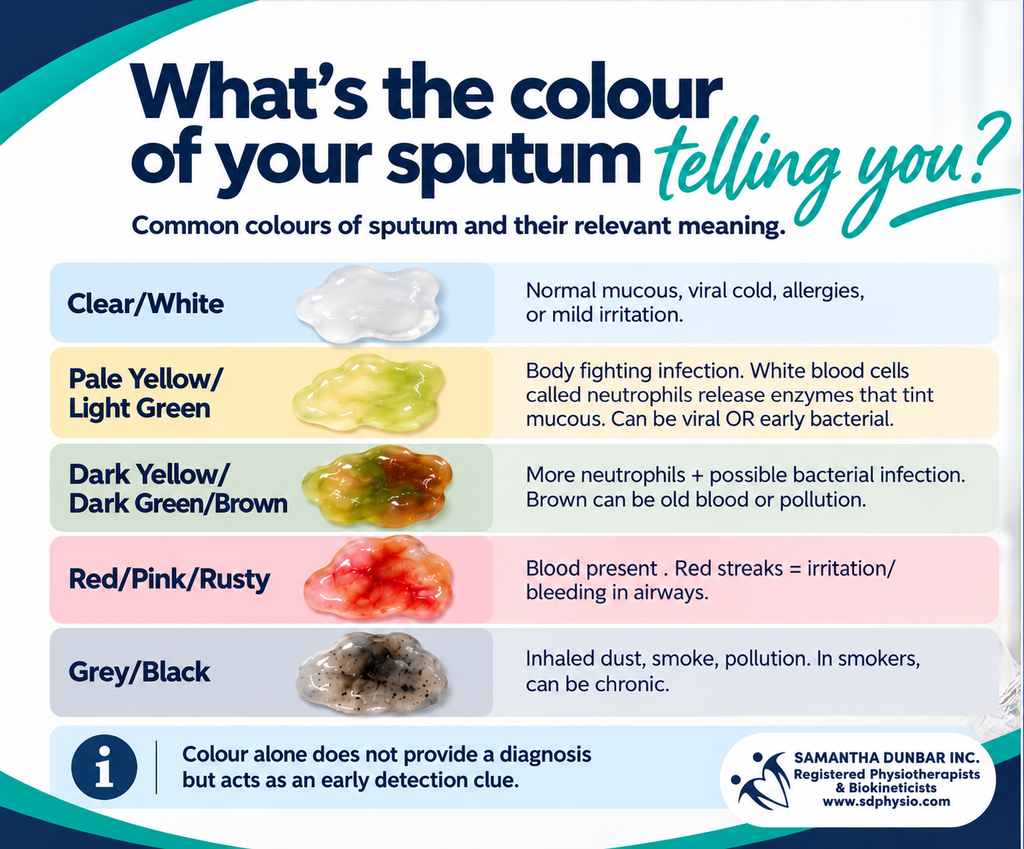
Common colours of sputum and their relevant meaning.
Clear/White: Normal mucous, viral cold, allergies, or mild irritation.
Pale Yellow/Light Green: Body fighting infection. White blood cells called neutrophils release enzymes that tint mucus. Can be viral OR early bacterial.
Dark Yellow/Dark Green/Brown: More neutrophils + possible bacterial infection. Brown can be old blood or pollution.
Red/Pink/Rusty: Blood present . Red streaks = irritation/bleeding in airways
Grey/Black: Inhaled dust, smoke, pollution. In smokers, can be chronic.
Colour alone does not provide a diagnosis but acts as an early detection clue.
Why Chest Physio + Sputum Monitoring Work Together
They’re a feedback loop:
1. You notice sputum turning darker/thicker → Early warning that mucous is building up and infection is active.
2. You start chest physio techniques → Breathing exercises, “huff coughing”, positioning to drain lobes. This gets the discoloured mucous out before bacteria overgrow.
3. Sputum gradually goes back to clear/white → Sign that airway clearance is working and inflammation is dropping.