
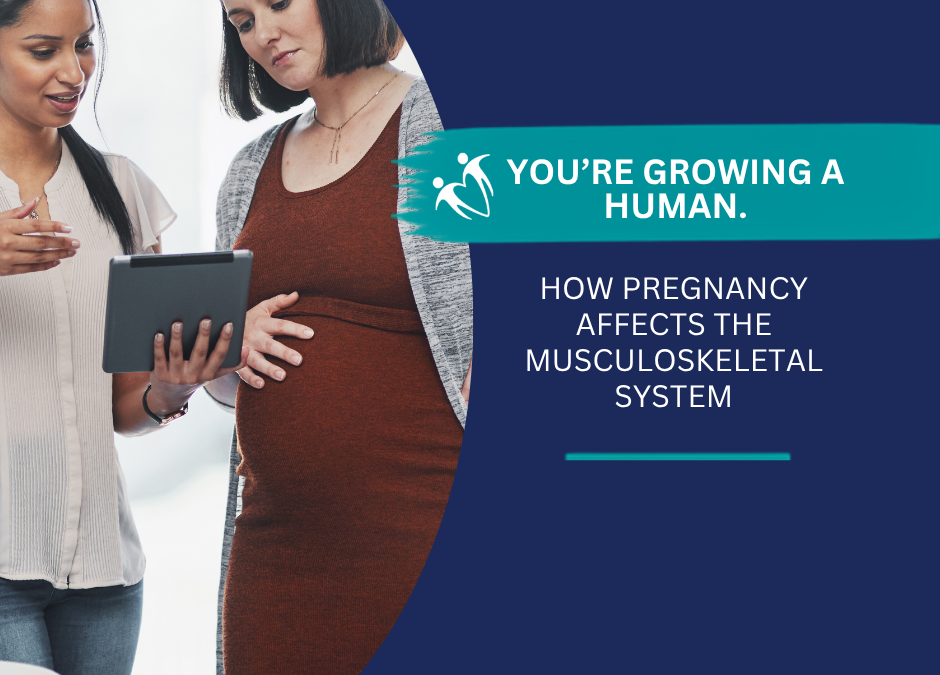
Pregnancy is amazing. It’s also one of the biggest physical transformations your body will ever go through in 9 months.
For many people, the joy of pregnancy comes with back pain, pelvic pain, sore hips, and feeling “off” in your own body. The good news: this is normal.
How Pregnancy Affects the Musculoskeletal System
Your body literally reshapes to grow a baby. That puts load on joints, muscles, and connective tissue.
Hormones loosen everything
Relaxin + progesterone soften ligaments to prep for birth. Great for the pelvis. Not so great for stability. You get more joint “wobble” in your pelvis, SI joints, and lower back. That’s why that “niggle” turns into pain.
Posture shifts = new stress points
As baby grows, your center of gravity moves forward. You arch your low back more, shoulders roll forward, and neck juts out. Resulting in lower back pain, upper back tension, headaches, wrist pain.
Core & pelvic floor are under pressure
Your deep core muscles and pelvic floor are carrying extra weight 24/7. This can lead to: back/pelvic girdle pain, incontinence, prolapse symptoms, and in some cases diastasis recti – that separation down the middle of your abs.
Performing daily activities gets harder
Walking, stairs, getting out of bed, sleeping, and even exercise feel different. Fatigue + pain can make you move less, which ironically makes stiffness and pain worse.
Common complaints:
-Pelvic Girdle Pain : sharp pain in pubic bone, hips, SI joint
– Low Back Pain: from posture + ligament laxity
– Sciatica: baby/uterus pressing on nerves
– Carpal Tunnel: wrist pain and numbness
– Foot/Ankle pain: extra weight + swelling
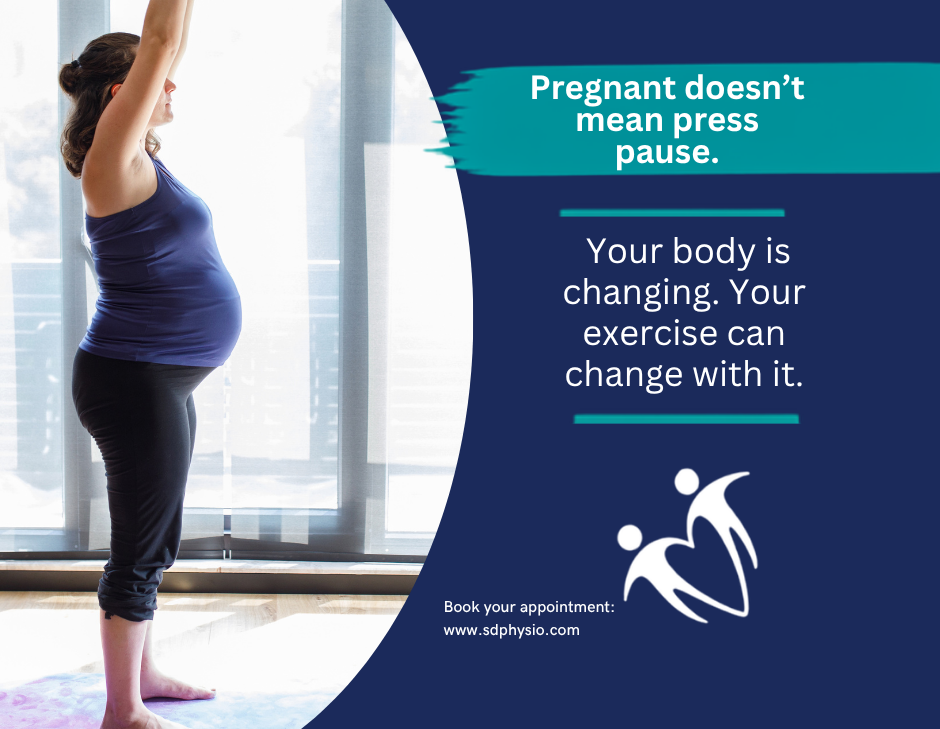
Can I still exercise during pregnancy? Yes.
Unless your doctor says otherwise, movement is medicine. Exercise during pregnancy helps reduce back pain, improves mood, helps with labor prep, and makes postpartum recovery easier.
Role of a Physiotherapist in Pregnancy
What a Physio helps with:
- Pain management: Manual therapy for back, pelvis, hips, and neck that’s safe in pregnancy
- Pelvic floor + core rehab: Learn to activate deep core and pelvic floor properly. This helps with pain, bladder control, and birth recovery
- Pelvic Girdle Pain treatment: Taping, belts, and exercises to stabilize wobbly joints
- Posture + breathing: Teach positions for sleep, work, and labor that reduce strain
- Preparation for birth: Positions, mobility, and education to help you feel confident
- Postpartum recovery: Assess for diastasis, pelvic floor function, and guide safe return to exercise
The Role of a Biokineticist in Pregnancy
Think of your biokineticist as your “movement and conditioning” coach. They bridge the gap between “safe” and “strong.”
What a Biokineticist helps with:
– Safe exercise programming: Design workouts for each trimester. Adjust for balance, blood pressure, and joint laxity
– Strength + endurance: Build glutes, back, and legs to support extra weight and prevent pain
– Cardiovascular fitness: Keep heart and lungs fit for pregnancy and recovery, with safe intensity
– Return-to-exercise postpartum: Graded plan to get you back to running, lifting, or sport without injury or prolapse risk
– Education on load management: How to lift, carry, and move with baby without flaring pain
Together: Physio helps you manage pain + dysfunction. Biokineticist helps you build strength + fitness around it.
Three Things You Can Do Right Now
1. Move daily, but smart: Walking, prenatal yoga, swimming, and controlled strength are gold. Avoid lying flat on your back after 20 weeks and any exercise with fall risk.
2. Support your pelvis: Maternity support belt, good shoes, and avoiding single-leg activities if you have SPD can help a lot.
3. See your team early: Don’t wait until pain is 8/10. A physio assessment in 2nd trimester and a biokineticist to guide exercise can prevent a lot of problems.
Your body is changing. Let’s support it.
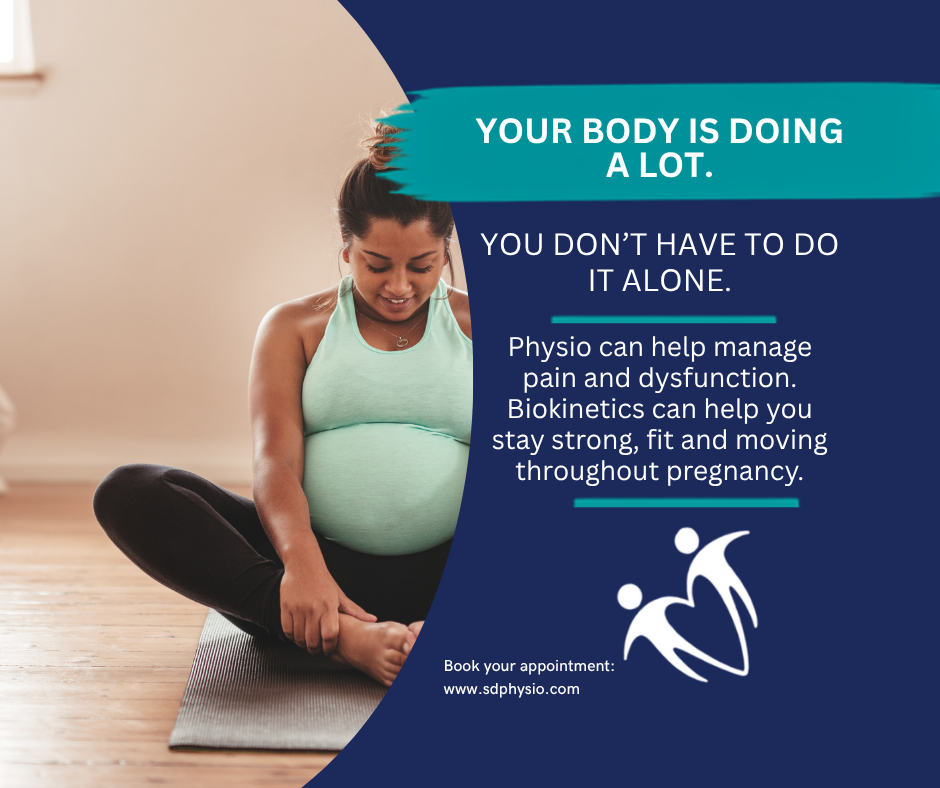
You don’t have to wait until pain starts interfering with your day. Whether you need help managing discomfort or guidance on staying active during pregnancy, our Physiotherapists and Biokineticists are here to support you.